+86-18961180163


- All
- Product Name
- Product Keyword
- Product Model
- Product Summary
- Product Description
- Multi Field Search
Views: 0 Author: Site Editor Publish Time: 08-11-2025 Origin: Site
Strawberries are among the world’s most popular fruits—sweet, aromatic, and in constant demand across both fresh markets and processing industries. However, traditional open-field strawberry cultivation faces major challenges such as unstable weather, pest pressure, and short growing seasons. For commercial growers seeking stability, consistency, and higher returns, greenhouse strawberry production has become the modern solution.
In a commercial greenhouse, the environment is fully controlled—temperature, humidity, and light are optimized for plant health and yield. This allows strawberries to be grown year-round, regardless of outside conditions. As a result, many agribusinesses and investors are turning to advanced facilities designed by a reliable commercial greenhouse manufacturer like Top Greenhouse, which offers integrated systems for irrigation, climate control, and hydroponic setups.
The foundation of successful strawberry farming lies in greenhouse design. The greenhouse should maintain a daytime temperature of 18–24°C and nighttime levels between 10–12°C. Roof vents and sidewall ventilation allow natural airflow, while automated shading screens and evaporative cooling systems protect plants during hot months. Proper insulation is essential for regions with cold winters.
Strawberries thrive in moderate climates with temperatures between 18–26°C (64–78°F). Excessive heat can reduce flower formation, while cold stress limits fruit size and sweetness. Greenhouses allow growers to maintain this ideal range automatically, ensuring optimal photosynthesis.
In addition, strawberries need about 8–12 hours of sunlight daily. Commercial greenhouses can be equipped with supplemental LED lighting systems to extend day length during winter or in low-light regions. These controlled lighting systems, provided by advanced commercial greenhouse manufacture technologies, ensure uniform fruit development throughout the production cycle.
Ideal temperature range: 18–24°C during the day, 10–12°C at night.
Automated heating, cooling, and CO₂ systems maintain steady growth.
Energy screens reduce heat loss and improve efficiency.
Strawberries require about 8–12 hours of light daily. LED grow lights extend daylight hours and promote photosynthesis in short-day seasons. Supplemental lighting is especially valuable in winter months for consistent yield.
Strawberries are shallow-rooted plants and require balanced nutrition for sustained fruiting. In soil or hydroponic systems, growers must ensure consistent nutrient delivery through drip irrigation. A mix containing nitrogen, potassium, and calcium enhances flowering and strengthens fruit firmness.
Modern irrigation systems integrated with sensors can automate water and nutrient supply based on substrate moisture, ensuring precision and avoiding waste.

A greenhouse’s closed environment also protects against rainfall, pests, and disease, reducing the need for pesticides. The combination of precise climate control and protection from natural stressors makes strawberries one of the most reliable and profitable crops for commercial growers.
Through temperature regulation and supplemental lighting, production can continue throughout winter or in cooler regions. Growers can sell high-quality strawberries during off-seasons when market prices are highest, achieving greater return on investment.
In countries where demand for fresh strawberries exceeds supply in colder months, greenhouse-grown berries can command premium prices, giving growers a significant competitive advantage.
Not all strawberry varieties perform equally in greenhouse conditions. Day-neutral and everbearing varieties, such as Albion, San Andreas, and Monterey, are ideal for year-round production because they flower independently of day length. These varieties offer high yields and excellent flavor profiles for both local markets and export.
Greenhouse strawberries can be propagated from runners or purchased as plug plants. Before planting, ensure the growing media is sterilized or clean. Plants are typically spaced 25–30 cm apart in hydroponic channels or raised troughs, allowing optimal air circulation and light exposure.
Traditional soil cultivation remains popular for its simplicity and lower setup cost. However, maintaining soil health requires regular monitoring of pH (5.5–6.5) and nutrient balance. Drip irrigation is essential for consistent moisture. Growers should also sterilize soil between cycles to avoid fungal buildup.
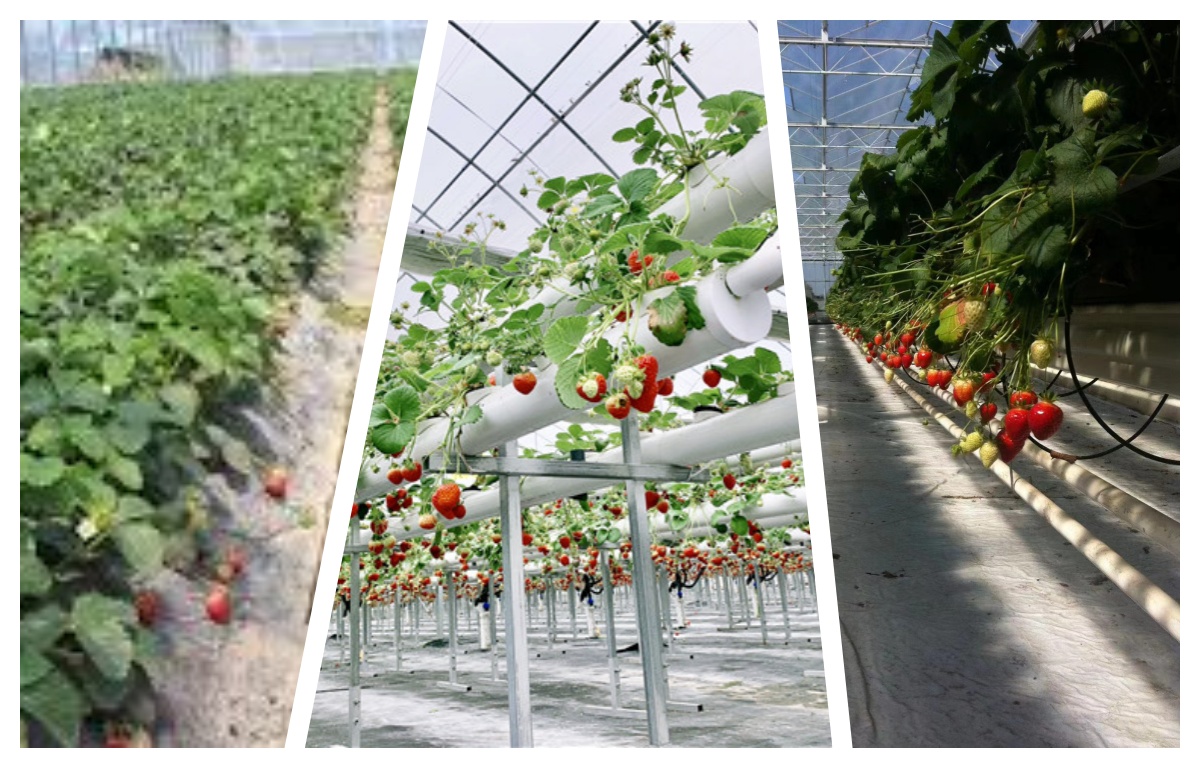
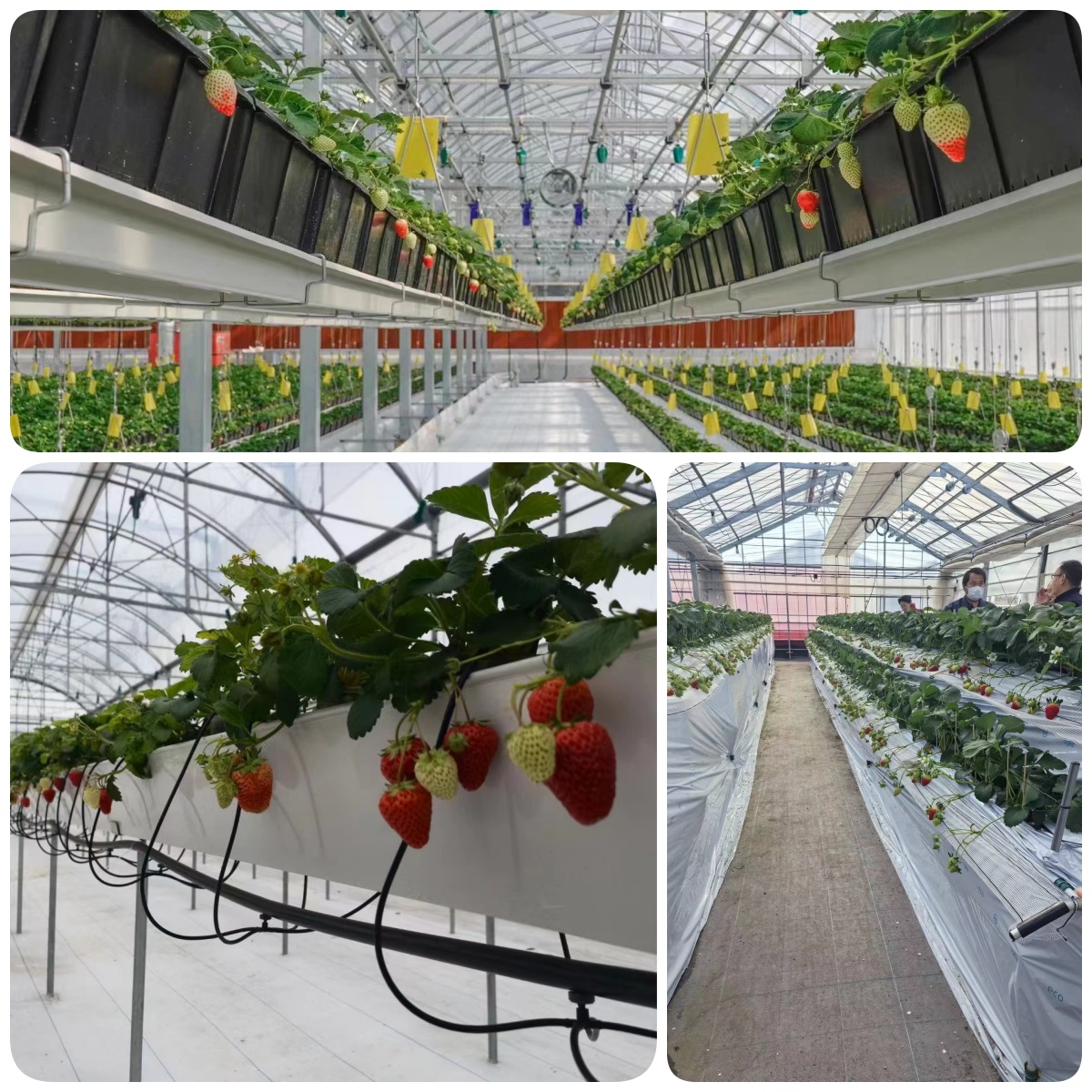
Hydroponic systems are ideal for maximizing yield in commercial greenhouses. Plants grow in inert media such as coco peat or perlite, allowing full control of water and nutrients. This method reduces soil-borne disease risks and enables vertical or gutter-based planting systems.
Hydroponics paired with automated fertigation systems——ensures precision feeding and efficient resource use.
Substrate growing involves cultivating strawberries in inert media such as coco peat, perlite, or rockwool instead of soil. This method provides excellent aeration, moisture retention, and nutrient control. It reduces soil-borne diseases and allows higher planting density.
Since natural pollinators are often absent in greenhouses, artificial or mechanical pollination methods are necessary. Many growers introduce bumblebees to ensure proper fruit set and uniform berry size. Alternatively, manual vibration tools can stimulate pollen release.
A well-designed commercial greenhouse will also maintain adequate humidity (60–70%) to aid pollen viability.
Efficient heating and cooling systems are essential for maintaining ideal growing conditions. Automated vents, shading screens, and evaporative cooling pads help prevent overheating, while heating pipes or heat pumps maintain warmth during cold months.
Greenhouse structures integrate these systems seamlessly, enabling remote control via PLC panels or mobile apps. Consistent humidity prevents fungal issues like botrytis while ensuring firm, glossy berries.
Supplemental lighting plays a critical role during winter. Full-spectrum LED lights encourage flowering and accelerate fruit ripening. Additionally, controlled CO₂ enrichment (up to 800–1000 ppm) can increase photosynthesis efficiency by 15–20%, significantly boosting yields.
Although greenhouses reduce exposure to outdoor pests, regular monitoring is still crucial. Common pests include spider mites, whiteflies, and aphids. Biological control methods—like releasing predatory insects—can maintain balance without harsh chemicals.
Strawberries have shallow root systems, making consistent water and nutrient delivery vital. Automated drip systems maintain even moisture, preventing both drought stress and waterlogging. The nutrient solution should have an EC between 1.5–2.0 mS/cm, adjusted based on growth stage.
Nitrogen-rich formula for leaf development.
Increase potassium and calcium for fruit set.
Balanced NPK ratio with micronutrients to enhance sweetness and firmness.
Greenhouse-grown strawberries are usually ready for harvest 30–45 days after flowering. Fruits should be fully red but still firm to the touch. Unlike field berries, greenhouse strawberries can be harvested gradually, providing consistent weekly yields.
To maintain quality, handle berries gently and store them immediately at 0–2°C. Greenhouse production ensures better fruit uniformity, allowing farmers to meet export standards with minimal sorting. Greenhouse systems can include integrated post-harvest cooling tunnels or packing facilities, ensuring a complete farm-to-market solution.
A well-managed commercial greenhouse can produce 8–12 kg of strawberries per square meter annually—up to three times higher than open-field cultivation. Controlled production reduces seasonal risk and ensures continuous income streams.
With automated irrigation and energy-saving greenhouse systems, production costs can be managed efficiently. Modern commercial greenhouse manufacturers provide ROI projections, helping investors estimate recovery within 3–5 years.
Greenhouse systems recycle water and minimize pesticide use. Hydroponic strawberry farms can reduce water consumption by up to 70%. Additionally, integrating solar energy and energy screens reduces operational costs while supporting eco-friendly branding—an advantage in today’s conscious markets.
Plan the greenhouse layout carefully before construction. Include paths for equipment access, efficient drainage, and space for future expansion. Modular designs from Top Greenhouse allow scalability as production increases.
Use cold storage and gentle handling systems to maintain freshness from harvest to delivery, reducing spoilage and maintaining brand value.
Position greenhouse-grown strawberries as high-end, eco-friendly products. Consistency in appearance and taste attracts supermarkets and export markets.
The future of strawberry cultivation lies in automation. Smart sensors, AI-based climate controls, and predictive irrigation software help growers make data-driven decisions. Top Greenhouse is at the forefront of integrating these technologies, ensuring clients remain competitive and future-ready.
As urban agriculture expands, compact vertical greenhouse systems are becoming increasingly popular. With modular designs and automated nutrient delivery, even urban investors can profit from small-scale yet high-output strawberry operations.
As a leading commercial greenhouse manufacturer in China, we offers custom-designed systems for strawberry cultivation. From steel structure to irrigation automation, every project is engineered for maximum yield and long-term durability.
We provide design consultation, material selection, climate system integration, and after-sales guidance. Whether you plan a small hydroponic setup or a large-scale commercial farm, we tailor solutions to your local climate and business goals.
We has delivered projects across Asia, Europe, and North America, helping clients achieve reliable production and strong ROI. Our technology ensures that every greenhouse operates with precision and sustainability.
With projects across Asia, Europe, and America, Top Greenhouse delivers proven technology tailored to each client’s climate and market conditions.

Growing strawberries in a commercial greenhouse transforms traditional farming into a high-tech, profitable venture. From precision climate control to sustainable hydroponics, every detail contributes to consistent yields and premium fruit quality.


