+86-18961180163


- All
- Product Name
- Product Keyword
- Product Model
- Product Summary
- Product Description
- Multi Field Search
Views: 0 Author: Site Editor Publish Time: 07-11-2025 Origin: Site
Tomatoes are one of the most popular and profitable crops grown in modern commercial greenhouses. Their global demand, long production cycle, and high market value make them an ideal choice for professional growers. However, achieving optimal yield and fruit quality requires more than just planting seeds—it demands precise control over climate, irrigation, nutrition, and greenhouse design.
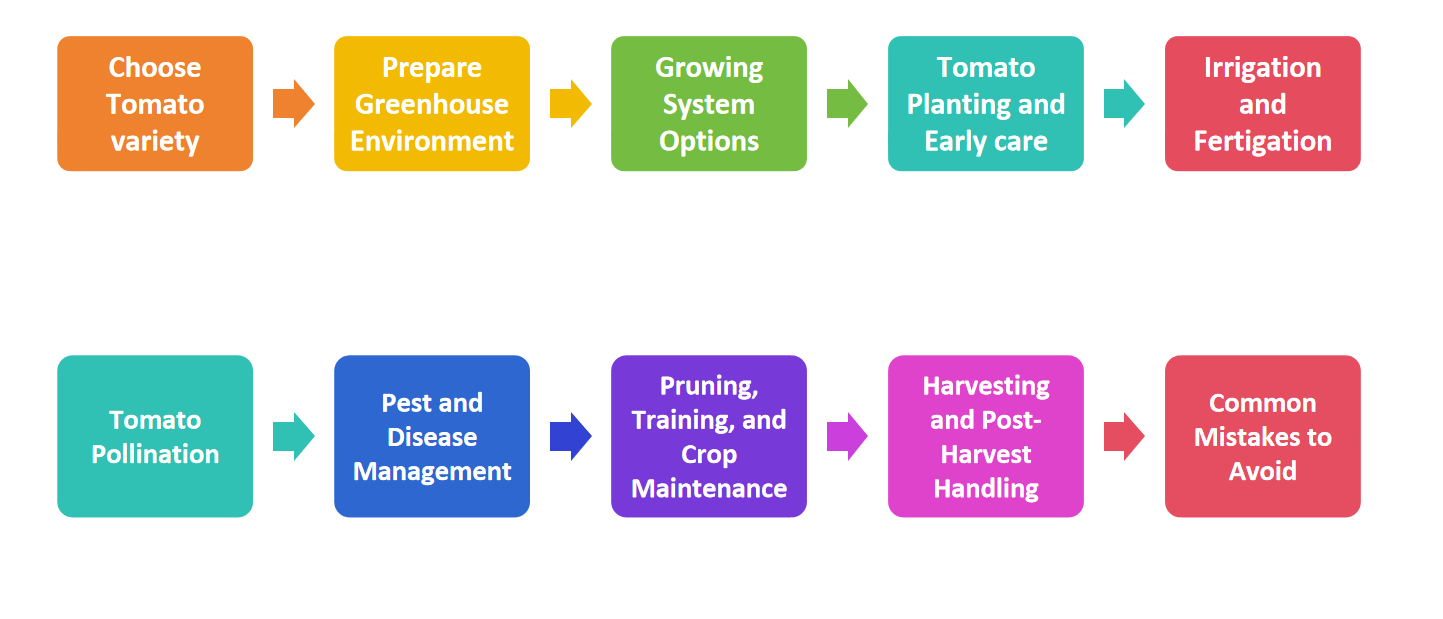
As a leading commercial tomato greenhouse manufacturer, TOP GREENHOUSE understand the challenges faced by large-scale tomato producers. This guide explores every stage of successful tomato cultivation—from choosing the right variety to managing pests, pollination, and harvest—in a commercial greenhouse.
Tomatoes are sensitive to temperature, light, and humidity. Outdoor conditions can be unpredictable, leading to inconsistent yields and fruit quality. A commercial greenhouse provides a stable growing environment that ensures:
Year-round production and consistent supply.
Precise temperature, light, and CO₂ control for faster growth.
Protection from wind, heavy rain, frost, and disease.
Efficient use of space and resources through vertical systems and hydroponics.
Tomatoes come in hundreds of varieties, but not all perform equally in a tomato commercial greenhouse. The right selection depends on your production system, market target, and regional climate.
When selecting a variety, consider:
Indeterminate types grow tall and fruit continuously—ideal for greenhouses.
Choose varieties with long harvest cycles for better ROI.
Market demand
Opt for fruits that match buyer preferences in size, color, and firmness.
Look for hybrids resistant to common pathogens like Fusarium and Verticillium wilt.
Some popular choices for greenhouse tomato production include:
‘Trust F1’: Excellent yield, disease resistance, and uniform fruits.
‘Geronimo F1’: Large red fruits with strong shelf life.
‘Beefsteak’: Big-fruited variety suited for premium markets.
‘Cherry and Grape Tomatoes’: Perfect for high-value niche sales.
Partner with seed suppliers experienced in greenhouse systems. They can recommend cultivars that perform well in controlled environments and align with your production goals.

Tomatoes thrive at:
Daytime: 22–28°C (72–82°F)
Nighttime: 16–18°C (60–65°F)
Fluctuations can cause flower drop, poor fruit set, or disease. Heating systems, combined with automated climate control from your commercial greenhouse manufacture, keep temperatures stable.
Tomatoes need 12–16 hours of light daily. In regions with low winter sunlight, supplemental LED or high-pressure sodium lighting maintains photosynthesis and prevents leggy growth. A well-designed greenhouse structure should feature high light transmission glass or polycarbonate, complemented by retractable shading screens to reduce excess summer radiation.
Ideal relative humidity (RH) for tomatoes is around 65–75%. Too much moisture leads to fungal problems; too little causes poor pollination. Ventilation systems—roof vents, side vents, or exhaust fans—designed by your greenhouse manufacturer help regulate air exchange and maintain healthy humidity levels.
Enriching the greenhouse with CO₂ up to 1000 ppm can boost tomato yield by 20–30%. CO₂ is supplied through generators or tanks and distributed via perforated tubes. Proper monitoring ensures efficiency and safety.
Modern commercial greenhouse tomato production increasingly uses soilless systems like rockwool, coco peat, or hydroponic NFT (Nutrient Film Technique). These systems:
Reduce soil-borne disease risks.
Allow precise nutrient control.
Improve root oxygenation and growth.
A commercial tomato greenhouse manufacture can design benches, gutters, and irrigation layouts optimized for your chosen growing method.
Hydroponic tomatoes grow in nutrient-rich water instead of soil. This method increases yield, shortens growth cycles, and allows efficient water and fertilizer use. Automated fertigation systems deliver balanced nutrients directly to roots. For high-end markets, hydroponics ensures cleaner, residue-free fruits.
If using coco peat or rockwool, maintain proper drainage and moisture balance. Oversaturation causes root diseases; dryness stresses the plant. Monitoring with sensors integrated into your greenhouse control system ensures consistency.
Start seeds in trays or small plugs under warm (25°C) and humid conditions. After 7–10 days, transplant healthy seedlings to propagation trays with good airflow and light.
Once seedlings reach 15–20 cm in height and show 6–7 true leaves, they’re ready for transplanting. Spacing typically ranges between 2.5–3.5 plants per m², depending on variety and trellis system.
Indeterminate tomatoes must be pruned regularly to maintain airflow and focus energy on fruit production. Use a single-stem training method with vertical strings or trellises. A well-built greenhouse should include anchor points and support wires to make pruning easier and safer.
Tomatoes are sensitive to both drought and overwatering. Automated drip irrigation systems are preferred because they deliver precise volumes to each plant.
Fertigation integrates fertilizer application into the irrigation system. A typical nutrient formula balances nitrogen (N), phosphorus (P), potassium (K), calcium (Ca), and magnesium (Mg). Monitoring EC (Electrical Conductivity) and pH helps maintain nutrient absorption efficiency.
Unlike outdoor tomatoes that rely on wind and insects, greenhouse tomatoes require artificial pollination to ensure fruit set.
Bumblebees are commonly introduced into tomato greenhouses for natural pollination. They are efficient and gentle, improving fruit size and uniformity.
In high-tech greenhouses, growers use mechanical devices or vibration tools to mimic the natural movement of bees. Climate-controlled ventilation and CO₂ levels support better flower fertility
Keep humidity between 65–70% and avoid excessive heat during flowering. Proper ventilation and light management from your greenhouse manufacturer ensure optimal pollination success.
Whiteflies – Cause leaf curling and transmit viruses.
Aphids – Suck sap and weaken plants.
Spider Mites – Thrive in hot, dry environments.
Thrips – Damage flowers and fruits.
Most greenhouse tomato diseases are caused by fungi or bacteria, including powdery mildew, botrytis, and fusarium wilt. Maintain good hygiene, disinfect tools, and manage humidity.
A sustainable approach combines biological control (predatory insects), mechanical traps, and minimal pesticide use. Well-ventilated, insect-proof greenhouses—designed by a skilled commercial tomato greenhouse—reduce pest entry and improve IPM efficiency.
Remove side shoots (“suckers”) weekly to direct nutrients toward fruit development. Overgrown foliage blocks light and traps moisture, increasing disease risk.
Maintain lower leaf removal gradually to improve air circulation without shocking the plant. Always leave enough foliage to protect fruit from sunscald.
Use strong trellises that support up to 5–6 kg per plant. Rotate crops annually or sterilize growing media between cycles to prevent pathogen buildup.
Tomatoes should be picked when they are fully colored but still firm. For long-distance transport, harvest slightly earlier (breaker stage).
Maintain post-harvest temperatures between 12–14°C to avoid chilling injury. Avoid stacking fruits excessively to prevent bruising.
For large-scale distribution, use ventilated crates or clamshell packaging that protects the fruit while allowing airflow. Consistent size and appearance increase brand value for exporters and wholesalers.
Modern commercial greenhouses are rapidly adopting automation technologies to enhance productivity, precision, and sustainability. Through integrated sensors, smart controls, and data-driven systems, growers can maintain optimal growing conditions with minimal manual effort. Partnering with an expert commercial greenhouse manufacturer ensures seamless integration of these advanced technologies for long-term operational success.
Automation improves efficiency and consistency. Sensors and PLC-based control systems manage irrigation, ventilation, lighting, and CO₂ dosing.
Data-driven systems track temperature, humidity, and nutrient levels, helping growers respond instantly to deviations.
Advanced structures from an experienced commercial tomato greenhouse manufacture can include double glazing, energy screens, and solar-integrated roofs, significantly reducing energy costs for heating and cooling.
Leads to root rot and nutrient leaching. Always check moisture sensors before irrigation cycles.
Lack of airflow causes fungal issues. Ensure vents and fans are properly sized and maintained.
Regularly sanitize pruning tools and remove plant debris to prevent disease spread.
Shading screens should be automated or adjustable to maintain consistent light levels throughout the day.
Growing tomatoes in a commercial greenhouse combines science, technology, and horticultural expertise. From selecting the right variety to mastering climate control, every detail influences yield and quality.
With the support of a professional commercial tomato greenhouse manufacture like top greenhouse, you can build a system that maximizes productivity, minimizes risk, and ensures consistent returns year-round. Whether you are expanding your operation or starting a new venture, mastering these tomato-growing techniques will help you achieve long-term success in the commercial horticulture industry.


