+86-18961180163


- All
- Product Name
- Product Keyword
- Product Model
- Product Summary
- Product Description
- Multi Field Search
Views: 0 Author: Site Editor Publish Time: 27-11-2025 Origin: Site
Glass greenhouses represent the highest level of controlled-environment agriculture. With strong structures, excellent light transmittance, and precise climate control, they provide ideal conditions for commercial vegetable, fruit, and flower production. However, to fully maximize the production potential of a glass greenhouse, irrigation must be equally precise. This is where drip arrow irrigation in glass greenhouse systems—especially drip arrow irrigation —play a vital role.
This article provided by TOP GREENHOUSE gives a comprehensive explanation of how drip irrigation works, why drip arrows are increasingly used in glass greenhouses, what crops benefit the most, and how commercial growers can design an efficient, scalable system. Whether your project is located in China, Central Asia, Europe, or North America, understanding advanced irrigation technology is essential for maximizing your greenhouse yield and ROI.
Drip irrigation is a precise water and nutrient delivery method that applies water directly to the root zone through emitters, drip lines, or drip arrows. Unlike traditional sprinkler systems, drip irrigation minimizes evaporation, lowers moisture on foliage, reduces disease pressure, and ensures uniform delivery of nutrients.
In a glass greenhouse environment—where growers invest heavily in climate control—water precision becomes even more important. Every drop matters, and every deviation from the optimal moisture level can affect yield, quality, and resource efficiency. That is why drip irrigation in glass greenhouse has become a standard part of modern greenhouse design.
Water goes directly to plant roots, greatly reducing waste and runoff.
Fertigation allows water-soluble fertilizers to be delivered in controlled quantities.
Because foliage remains dry, growers avoid issues such as powdery mildew, botrytis, and leaf spot.
Automated valves and dosing systems minimize manual irrigation work.
Consistent moisture encourages deeper, stronger root systems.
For high-value crops grown in glass greenhouses (tomato, pepper, strawberry, lettuce, rose), drip irrigation is not optional—it is essential for commercial success.
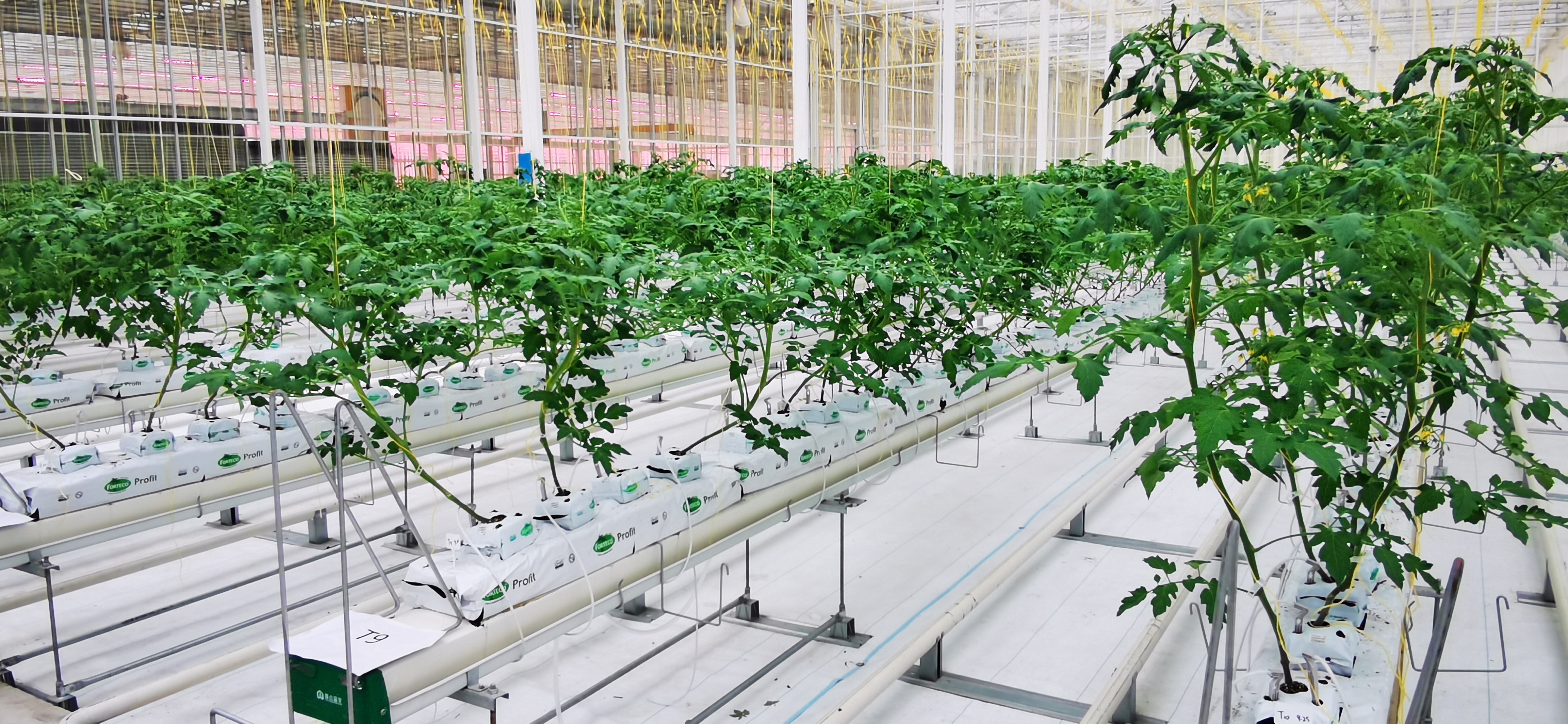
Drip arrow irrigation—often used in substrate bags, pots, rockwool slabs, or cocopeat—is an advanced form of drip irrigation. Instead of delivering water through a long emitter line, a plastic needle-shaped arrow directs water precisely into the substrate.
It is especially suitable for glass greenhouses because of its high precision, uniform flow rate, and ability to irrigate individual plants.
A typical system consists of:
Mainline and sub-main pipes (PVC or PE)
Pressure-compensating drippers (PC drippers)
Distribution tubing (3–5 mm)
Drip arrows (single or double)
Fertilizer injection system
Control and automation unit
The PC dripper ensures that each plant receives the same amount of water regardless of changes in pressure caused by long pipe runs or elevation differences inside the greenhouse.
The arrow is inserted into the substrate or pot, allowing water to drip slowly and evenly around the root zone.
Precise single-plant irrigation
Each plant gets exactly the right amount of water.
Better control of EC and pH
Since growers can measure drain water per plant, nutrient management becomes more accurate.
Suitable for all substrate-based systems
Cocopeat bags, rockwool slabs, pots, and nursery trays.
Modular and easy to expand
Just add new arrows or drippers when adding rows or crops.
Clean greenhouse environment
No water splashing, puddles, or soil compaction.
This makes drip arrows one of the most efficient irrigation system tools for high-end commercial greenhouses.
Drip arrow irrigation is one of the most efficient water-delivery methods used in modern greenhouse irrigation systems. It delivers water and nutrients directly into the root zone of each plant, allowing growers to maintain full control over moisture, EC, pH, and fertigation scheduling. For drip irrigation in glass greenhouses, this technology plays a critical role in achieving stable production, maximizing yields, and ensuring consistency across large-scale commercial farms.
Glass greenhouses often operate with highly controlled climates, meaning that irrigation becomes the most important variable influencing crop performance. Drip arrow systems provide a precise, low-waste solution that fits perfectly with substrate-based growing methods such as rockwool slabs, coir grow bags, perlite mixes, and potted systems. Below are the major crops that benefit most from this irrigation method.
Tomatoes require a stable and carefully controlled moisture level to maintain uniform fruit size, reduce cracking, and prevent physiological disorders like blossom-end rot. The direct water delivery offered by drip arrows supports consistent EC and nutrient supply—two factors that directly influence fruit taste, color, and brix level. In a glass greenhouse environment, where climate is already optimized, the irrigation system becomes the key tool for controlling yield and fruit quality.
Highly consistent water distribution reduces crop stress.
Supports high-frequency small irrigations that match tomato water uptake patterns.
Rockwool or coir slabs maintain better root aeration when irrigated with drip arrows.
Enables precise fertigation strategies for premium-grade fruit production.

drip irrigation system for glass greenhouse

drip irrigation system for glass greenhouse
Cucumbers grow quickly and have shallow root systems that demand constant hydration. Drip arrows provide frequent, low-volume irrigation pulses that keep the growing media evenly moist without flooding. This is essential for continuous vine growth and for preventing issues such as fruit deformation or water stress during hot periods.
Works well with high-frequency irrigation schedules.
Improves water distribution uniformity in long substrate slabs.
Foliage remains dry, reducing the risk of powdery mildew and other leaf diseases.
Integrates smoothly into automated greenhouse irrigation systems for day–night scheduling.
Capsicum crops are extremely sensitive to fluctuations in substrate moisture. Sudden changes can cause flower drop, fruit deformation, and reduced yield. Drip arrows maintain stable moisture levels around each plant, ensuring strong flowering, good fruit setting, and consistent fruit size throughout the growing season.
Better control of root-zone EC for smooth, balanced growth.
Reduced risk of physiological issues such as sunscald and blossom drop.
Helps maintain a uniform canopy with stronger stems and continuous fruit production.
Strawberries are commonly grown in raised gutters or substrate troughs in European-style glass greenhouses. These systems require gentle, targeted irrigation to avoid root saturation and disease. Drip arrows offer the precision needed to maintain stable EC and pH levels, which directly affect berry flavor, color, and firmness.
Prevents wet foliage, lowering botrytis infection risk.
Enables fine-tuned fertigation during fruiting stages for improved sweetness.
Provides consistent moisture for better berry size and uniformity.
Works well with climate-controlled greenhouse irrigation systems for winter production.
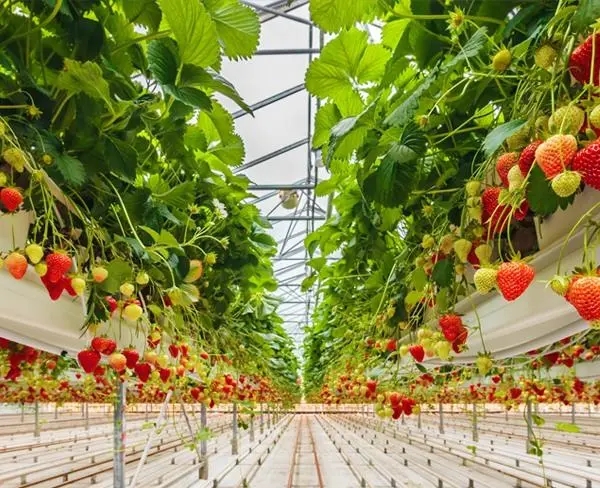
Blueberries in protected cultivation require precise control over moisture. Over-irrigation can cause root damage, while under-irrigation leads to weak growth and small berries. Drip arrows deliver small and accurate amounts of water to each pot, ensuring that the substrate stays well-aerated and slightly acidic—ideal conditions for blueberry roots.
Prevents root diseases, which blueberries are highly prone to.
Ensures even distribution across hundreds or thousands of pots.
Helps stabilize EC for better berry coloration and sweetness.
Works smoothly with automated greenhouse irrigation systems.
Floriculture crops require extremely clean irrigation practices to avoid fungal contamination and maintain high-quality visual appearance. Drip arrows deliver water directly to the root zone, keeping leaves, stems, and flowers dry while supporting consistent growth across the entire greenhouse.
Better bloom quality due to stable nutrient delivery.
Reduced foliar disease because no water reaches the canopy.
More uniform plant height and stem length—critical for commercial grading.
Ideal for bench and pot systems commonly used in glass greenhouses.
Herbs require frequent, gentle irrigation to maintain tender leaves and strong aroma. Drip arrows deliver water evenly to each plant or pot, ensuring consistent growth across high-density production systems.
Precise low-volume irrigation supports high-quality, aromatic produce.
Prevents wet foliage, which is important for leafy crops with short harvest cycles.
Reduces labor and water waste, essential for large-scale herb growers.
Works seamlessly with automated fertigation in greenhouse irrigation systems.
A high-performance irrigation system is not simply pipes and drippers. It is a combination of precise mechanical devices, filtration systems, automation, and nutrient dosing equipment.
Below are the essential components of a modern drip irrigation in glass greenhouse setup.
Most commercial growers use a dedicated tank to ensure stable water pressure and quality. Rainwater collected from the glass roof can also be used after filtration.
Filtration is critical because microparticles or algae can block drippers.
Typical filtration units include:
Disc filters
Screen filters
Media (sand) filters
A two-stage filtration process is common in large greenhouses.
This is the “heart” of the irrigation system. Fertigation units mix water with soluble fertilizers and acid, controlling:
EC
pH
Nutrient concentration
Irrigation timing
Modern systems use sensors and computer control to adjust irrigation automatically based on climate and drain levels.
PC drippers ensure that every plant receives the same water flow—even in long rows.
Common flow rates:
2 L/h
4 L/h
8 L/h
Growers select based on substrate volume and crop type.
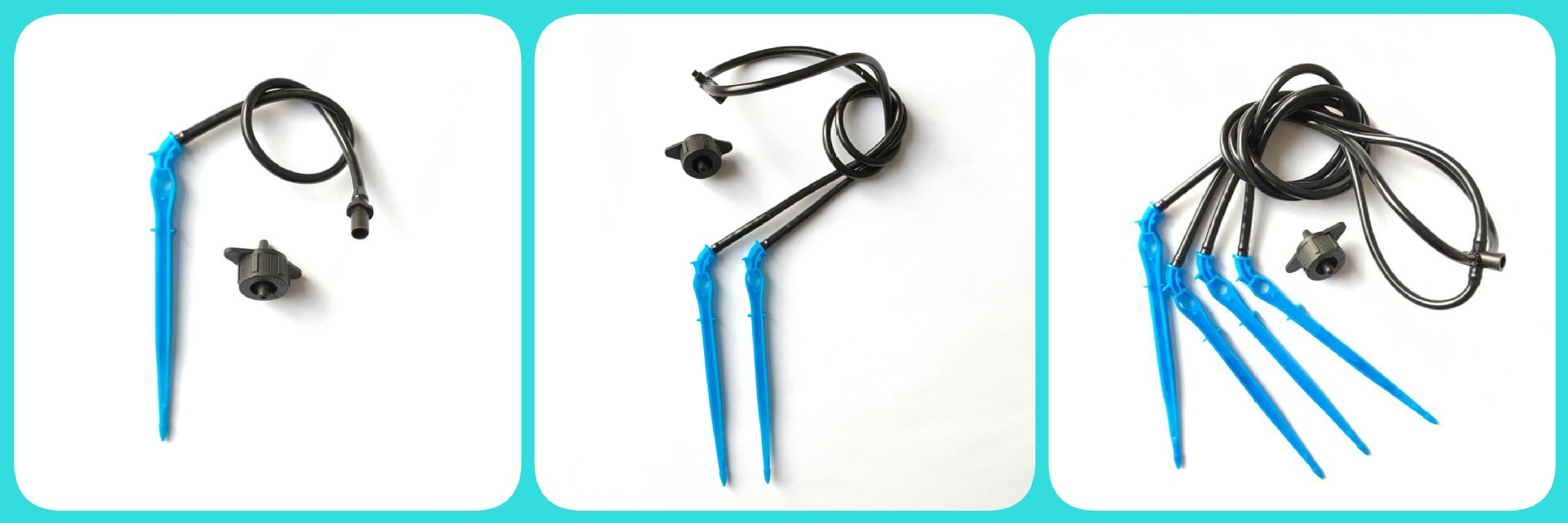
Arrow types include:
Single arrow
Double arrow
Long arrow for deep substrates
Distribution tubes connect arrows to the dripper, allowing modular and flexible installation for each plant.
Advanced controllers integrate with climate computers to coordinate:
Irrigation frequency
EC/pH adjustment
Solar radiation-based irrigation pulsing
Drain monitoring
This ensures consistent crop conditions and maximizes yield.
A well-designed system provides uniform irrigation, prevents clogging, and supports crop growth throughout the production cycle.
Measure rows carefully and plan:
Number of plants per row
Number of arrows per plant
Pipe diameter
Total dripper count
For tomatoes and cucumbers:
1 dripper → 2 arrows is the standard design.
For strawberries or small pots:
1 dripper → 4 arrows may be used.
Flow rate depends on substrate and crop.
Examples:
Rockwool tomato: 4 L/h
Cocopeat cucumber: 2 L/h
Strawberry gutter: 1–2 L/h
Blueberry pot: 2–4 L/h
Insert the arrow at:
Slight angle
Near root zone
Not too deep (to ensure uniform distribution)
Only insert into firm substrate to avoid loosening.
Prevent clogging by:
Using clean soluble fertilizers
Acid injection for high pH water
Regular flushing of lines
Proper micron filtration
Glass greenhouses already have advanced systems:
Heating pipes
Cooling pads
Roof ventilation
Fogging systems
Irrigation must work in coordination with these. For example, irrigation should slow down during periods of low solar radiation to avoid root zone oversaturation.
Top Greenhouse provides complete greenhouse irrigation system, With global project experience in Central Asia, the Middle East, Europe, and Africa, we deliver engineering-level irrigation systems that support high-yield production year-round.
Irrigation system design
Drip arrow system installation
Fertigation units
Smart greenhouse automation
Substrate growing systems
After-sales technical training
Drip irrigation—especially drip arrow irrigation—is one of the most efficient and productive irrigation technologies available for glass greenhouses. It delivers precision water and nutrient supply directly to each plant, reduces waste, lowers disease risk, and increases crop quality. For high-value crops such as tomatoes, peppers, strawberries, cucumbers, blueberries, herbs, and flowers, a drip arrow system is essential to achieving commercial success.
With the right design, filtration, fertigation, and automation, drip arrow irrigation in glass greenhouse becomes a reliable, high-performance solution that supports sustainable, profitable modern agriculture.


