+86-18961180163


- All
- Product Name
- Product Keyword
- Product Model
- Product Summary
- Product Description
- Multi Field Search
Views: 0 Author: Site Editor Publish Time: 25-11-2025 Origin: Site
Tomato production in poly greenhouses continues to expand globally due to high market demand, predictable yield, and stable production performance. In greenhouse management, irrigation is one of the most decisive factors affecting fruit quality and plant vigor. Modern growers increasingly focus on precision irrigation technologies, particularly drip irrigation for tomato greenhouse, which allows water and nutrients to be delivered with maximum efficiency. For soil-grown tomato systems, drip irrigation stands out as the most reliable and cost-effective solution. TOP GREENHOUSE writes his article to explain the benefits of soil cultivation in poly film greenhouses and why drip irrigation generates significant agronomic and economic advantages.
Drip irrigation delivers water exactly where tomato roots need it. This reduces waste, prevents soil saturation, and maintains ideal moisture. When used as drip irrigation for tomato greenhouse, growers can achieve uniform fruit size, reduce cracking, and enhance cluster development.
High humidity inside poly film structures can promote fungal and bacterial diseases. Drip irrigation keeps leaves dry, limiting pathogen spread. Using drip irrational methods helps growers cut pesticide use and maintain cleaner production.
Fertilizers can be applied directly through the irrigation system. This improves nutrient absorption and reduces losses. When integrated into drip irrigation for tomato greenhouse systems, fertigation can increase yields by 20–40% and greatly improve consistency.
By targeting only the root zone, drip irrigation decreases water consumption dramatically. This benefit is especially crucial for regions with limited water resources. A well-designed drip irrigation for tomato greenhouse system significantly enhances sustainability.
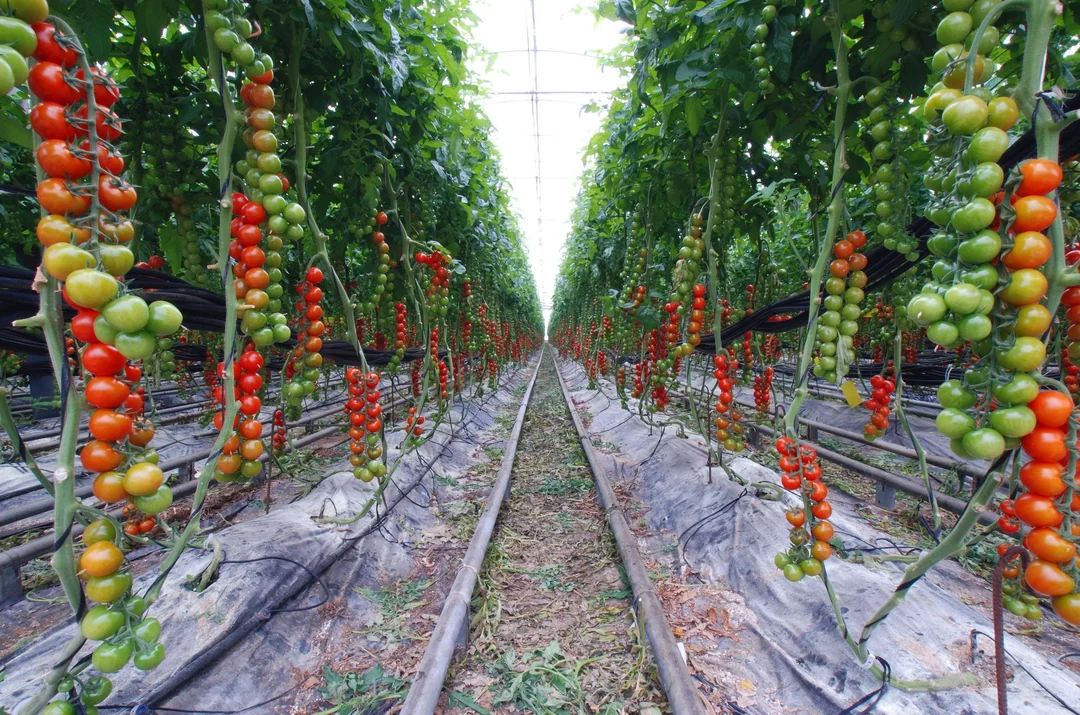
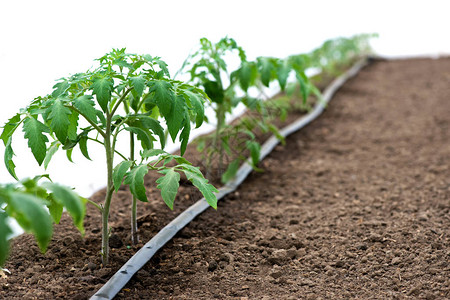
Stable moisture reduces blossom-end rot, fruit cracking, and irregular shape. Growers may see 15–30% higher marketable yield by adopting drip irrational technology, leading directly to higher revenue per square meter.
Drip irrigation replaces manual watering and automates daily water supply tasks. A drip irrigation for tomato greenhouse line can irrigate hundreds of plants with minimal supervision, reducing labor costs significantly.
Because drip systems deliver water efficiently, fertilizer use also becomes more precise. This increases nutrient-use efficiency and decreases total consumption. Many growers experience 20–30% fertilizer savings with drip irrigation for tomato greenhouse systems.
Tomatoes require stable soil moisture to maintain root function and prevent stress. Drip irrigation for tomato greenhouse setups maintain steady moisture levels and avoid the risks of over-irrigation or drought.
When water is supplied slowly and consistently, roots grow deeper and become stronger. This enhances nutrient absorption and improves resistance to high temperatures, supporting long-term production.

multispan poly film greenhouse

drip irrigation for tomato greenhouse
Placed along each row, drip lines ensure uniform water distribution. These lines form the backbone of any drip irrigation for tomato greenhouse design. High-quality drip tapes help maintain consistent emitter spacing and deliver precise water volumes directly to the root zone, supporting healthy and uniform tomato growth.
Filters ensure that emitters do not clog. Clean water is essential to protect the reliability of the drip irrigation system. Multi-stage filtration—such as sand, disc, and mesh filter combinations—provides stable flow and keeps irrigation lines functioning smoothly even when water quality is low.
Stable water pressure is necessary for uniform irrigation. Durable PE or PVC pipes help maintain consistent distribution throughout the greenhouse. Pressure regulators ensure every row receives equal water volume, which is crucial for balanced plant development in a drip irrigation setup.
Venturi injectors or dosing pumps allow accurate fertigation, improving root-zone nutrient availability within drip irrigation for tomato greenhouse systems. Injectors help maintain stable EC and pH levels, preventing nutrient fluctuations that can affect fruit set and overall productivity.
Control valves divide the greenhouse into multiple irrigation zones, making it easy to schedule water applications for young and mature plants separately. When paired with timers or automated controllers, they improve the efficiency ****, reduce labor, and maintain reliability during high-temperature periods.
Water tanks and mixing chambers help stabilize water temperature and ensure fertilizers dissolve evenly before entering the main line. This setup supports smooth operation of the drip irrigation for tomato greenhouse system, especially in regions with fluctuating water quality or limited pressure stability.
Soil-based cultivation requires fewer structural elements compared with hydroponics. Growers do not need substrate bags, rockwool slabs, drainage channels, support gutters, or specialized return-flow systems. This makes soil cultivation much easier and faster to set up in poly film greenhouses. When paired with drip irrigation for tomato greenhouse systems, growers only need drip lines, a simple filtration system, and basic water supply infrastructure—significantly reducing initial capital investment.
Hydroponic systems often rely on automated fertigation units, EC/pH controllers, nutrient tanks, pumps, and continuous system monitoring. Soil cultivation avoids these complex components, leading to lower equipment costs and reduced maintenance workload. The simplicity of drip irrigation for tomato greenhouse irrigation further strengthens cost efficiency, as drip lines are inexpensive, easy to install, and require minimal technical expertise. This combination makes soil-grown tomato production one of the most cost-effective approaches for growers seeking reliable returns.
Soil acts as a storage bank for moisture and nutrients, minimizing sudden fluctuations in EC or pH. When irrigation is delivered , tomatoes experience balanced root-zone conditions, promoting uniform fruit development and stable growth cycles.
Tomatoes grown in soil often develop richer taste, higher sugar content, and improved firmness. Slow nutrient release and stable water supply from drip irrigation for tomato greenhouse systems allow the plants to maintain ideal physiological balance throughout the growth period.
Drip irrigation is the most efficient, economical, and sustainable irrigation method for soil-grown tomatoes in poly film greenhouses. Its precision, water savings, disease reduction, and yield benefits all point to one conclusion: a carefully designed drip irrigation system is essential for modern tomato production. Growers who adopt this method gain higher quality fruit, lower input costs, and stronger profitability across the entire production cycle.


