+86-18961180163


- All
- Product Name
- Product Keyword
- Product Model
- Product Summary
- Product Description
- Multi Field Search
 |


TOP
Polyester, Polyolefine
OEM, OED
ISO
China
| Quantity: | |
|---|---|
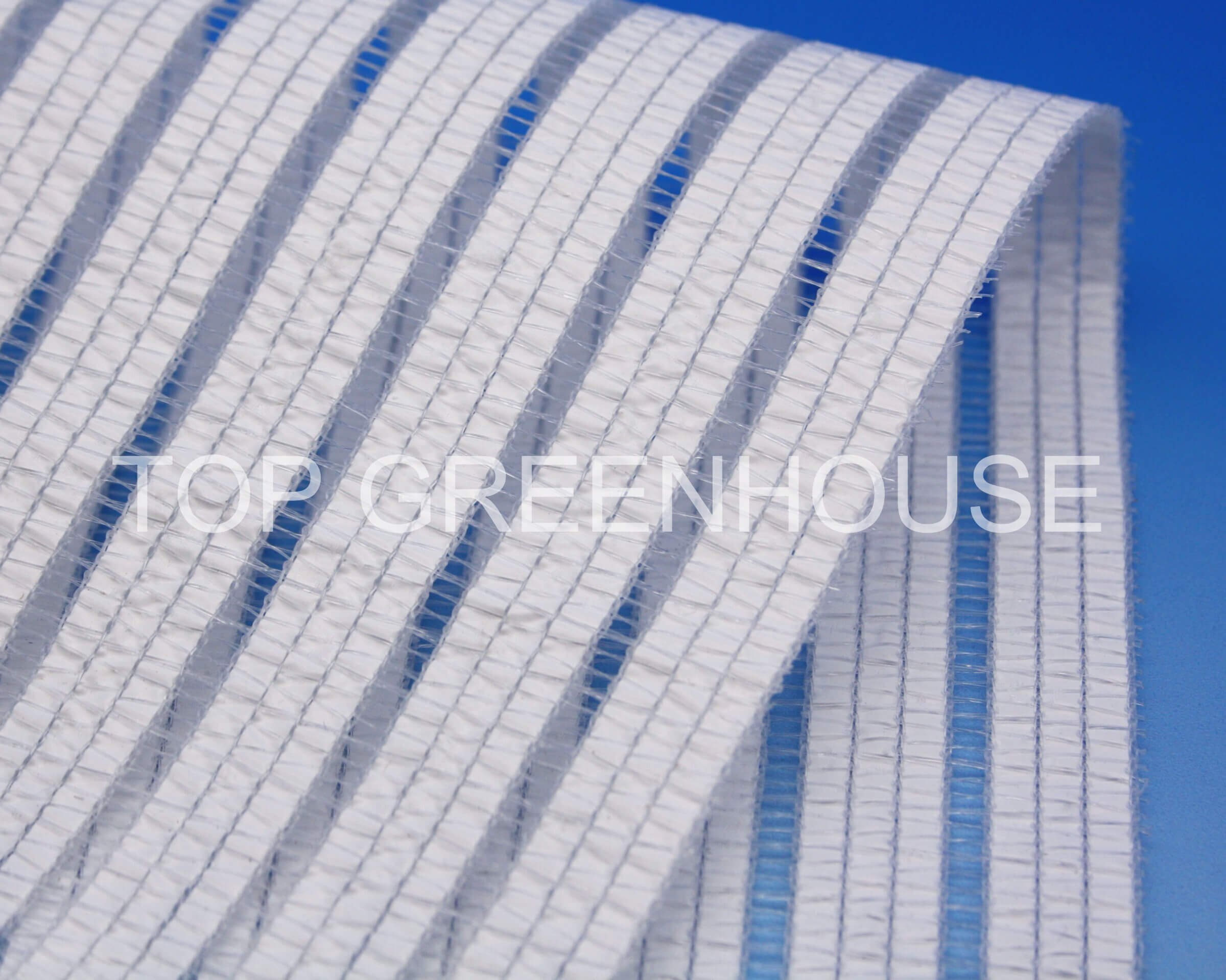
The external white screen is designed with an open-structure surface that enhances light diffusion and improves overall light quality inside the greenhouse. Its highly reflective white side delivers soft, uniform, multi-angle light to crops, helping stimulate stronger growth and better canopy development. The open mesh allows continuous airflow, effectively lowering both greenhouse and plant temperatures during high-heat conditions while providing reliable shading throughout the day.
At night, the screen minimizes heat loss by maintaining a warmer microclimate around the plants, supporting stable growth across varying climates. Built for outdoor protection, the external white screen also shields greenhouses from hail, heavy rain, and harsh weather, making it a durable, energy-efficient solution for growers seeking improved climate control and crop performance.
The white film strips are designed to enhance light diffusion, delivering soft, uniform, multi-angle light to crops for improved growth and higher light-use efficiency. By reducing harsh shadows and increasing canopy penetration, the screen helps create a balanced greenhouse light environment, supporting stronger photosynthesis and healthier plant development across different cultivation stages.
The open-weave structure ensures strong ventilation and airflow, helping maintain a stable greenhouse climate. This design reduces heat buildup, lowers humidity, and minimizes disease risk caused by stagnant air. The natural cooling effect improves plant comfort during hot periods, making it an effective climate screen solution for growers seeking better temperature control and energy savings.
Made from co-extruded polymer film strips and high-strength monofilament fibers, the screen offers excellent durability and weather resistance. UV-stabilized materials protect it from sunlight, rain, and wind, ensuring consistent shading performance over years of use. Its robust construction makes it a long-lasting, low-maintenance choice for commercial greenhouses.
Engineered for thermal stability, the screen maintains its shape even in high-temperature environments. At 70°C for 2 hours, both longitudinal and transverse shrinkage remain below 2.0%, ensuring the screen stays flat and properly tensioned. This stability helps maintain uniform shading and reduces adjustment or replacement frequency.
The screen supports multiple installation methods—rolling, sliding, or fixed—making it suitable for various greenhouse designs and climate control systems. It performs effectively as an external shading solution, reducing temperature, improving light quality, and protecting crops. Its versatility allows use in vegetable greenhouses, flower cultivation, nurseries, and large commercial growing operations.
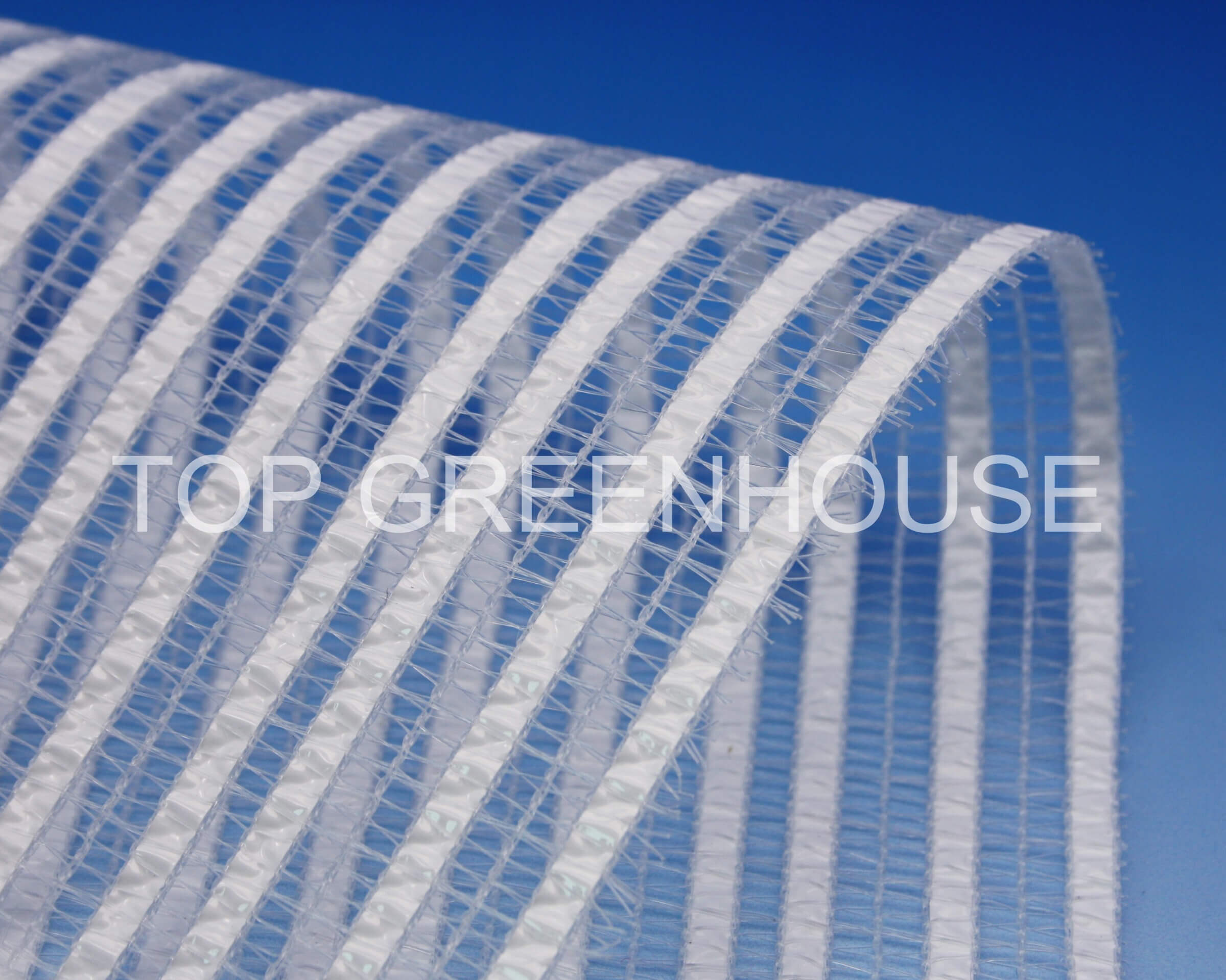
DOWPE 30 V E

DOWPE70 V E B
| Model | Material | Light Transmittance (sunny) | Light Transmittance (cloudy) | Shading Rate | Energy Saving Rate |
| DOWPE 30 V E | Polylolefin | 70% | 63% | 30% | 15% |
| DOWPE 40 V E | Polyolefin | 61% | 56% | 39% | 15% |
| DOWPE 50 V E | Polyolefin | 49% | 46% | 51% | 20% |
| DOWPE 60 V E | Polyolefin | 41% | 38% | 59% | 20% |
| DOWPE65 V E B | Polyolefin | 36% | 34% | 64% | 20% |
| DOWPE70 V E B | Polyolefin | 31% | 28% | 69% | 20% |
At the heart of this product lies 6-Gauge Warp Knitting Technology, a cutting-edge textile process that combines strength, precision, and flexibility. In this system, yarns are interlaced vertically using six needles per inch, creating a dense and uniform fabric structure. The interweaving of aluminum and PET strips results in a highly durable yet lightweight climate screen with superior mechanical and optical performance.

Warp Knitting Machine

Warp Knitting Machine
High Structural Accuracy: The even distribution of yarn tension ensures consistent density and excellent dimensional stability across large areas.
Enhanced Durability: The dense knit pattern provides outstanding resistance to tearing, stretching, and deformation, ensuring a long operational lifespan.
Optimized Light Management: Precisely spaced diffusive elements scatter light evenly, promoting homogeneous illumination within the crop canopy.
Energy Efficiency: The reflective aluminum components minimize heat gain during the day and help retain thermal energy at night.
Soft and Easy to Operate: The flexible textile construction folds smoothly and occupies minimal space when retracted.
Fray-Resistant Cutting: The edges remain stable after trimming, allowing easy customization and installation without unraveling.
Secure Material Bonding: PET and aluminum layers are tightly fused to prevent delamination, ensuring reliable performance even in automated climate control systems.
This combination of material engineering and textile precision ensures that each climate screen performs consistently over years of demanding greenhouse use.
Provides high-performance external shading to reduce direct solar radiation and prevent overheating in greenhouses during peak summer conditions. By lowering heat load on plants and structures, the screen helps maintain a cooler, more stable climate, improving crop resilience and reducing the need for excessive mechanical cooling or energy consumption.
The open-structure design maximizes natural airflow, allowing hot air to escape quickly and fresh air to circulate freely. This ventilation effect helps stabilize humidity, reduces disease pressure caused by stagnant air, and creates a more comfortable environment for crops, especially in regions with intense sunlight and high temperatures.
The reflective white surface produces soft, diffused, multi-angle light that penetrates the crop canopy more evenly. This improves photosynthetic efficiency, reduces shading competition between plants, and supports uniform growth. Better light distribution also helps prevent leaf burn and enhances overall greenhouse light quality for sensitive crops.
When deployed at night, the screen helps reduce thermal radiation loss, maintaining a warmer microclimate around the plants. This is particularly beneficial in areas with large day-night temperature differences, helping stabilize crop development, prevent cold stress, and support consistent growth during cooler nighttime conditions.
The durable external white screen provides a protective barrier against harsh weather, including hail, heavy rain, and strong winds. Its UV-stabilized materials also shield crops from excessive sunlight and long-term UV exposure, prolonging greenhouse longevity and minimizing crop damage throughout the year.
Ideal for a wide range of crops—vegetables, flowers, young plants, tree seedlings, and commercial horticulture varieties. Its climate-control benefits support both high-value specialty crops and large-scale production systems, making it a flexible, effective solution for growers aiming to optimize greenhouse performance across seasons.
Every roll of the Transparent Diffuse Energy-Saving Screen is produced in a fully automated weaving and lamination facility. The production process emphasizes consistency and precision—each batch undergoes strict quality checks for material integrity, shading accuracy, and tensile strength. Our in-house testing ensures that every product meets international greenhouse standards for durability, energy performance, and light transmission.
Warpping

Knitting

Testing

Packing
By combining these testing tools, we guarantee that each climate screen meets strict quality standards for energy efficiency, light management, durability, and UV resistance, providing growers with reliable and consistent greenhouse solutions.
An external white screen is used to provide shading, improve light diffusion, reduce heat load, enhance ventilation, and protect crops from harsh weather. It helps maintain stable greenhouse temperatures and supports healthier plant growth.
The white reflective surface scatters sunlight into soft, diffused light, reducing harsh shadows and improving canopy penetration. This creates uniform illumination that enhances photosynthesis and promotes balanced crop development.
Yes. Its open-structure design allows hot air to escape and reduces solar heat gain. This helps maintain a cooler indoor climate, especially during high-temperature periods.
When closed at night, the screen minimizes heat loss by reflecting thermal radiation back into the greenhouse. This helps maintain warmer crop temperatures and reduces nighttime stress.
Vegetables, flowers, young plants, nurseries, ornamentals, and fruit seedlings benefit from better light diffusion, improved climate control, and enhanced protection from extreme weather.


