Introduction to External Shading in Modern Greenhouses
External shading screens play a crucial role in today's greenhouse systems. As growers aim for higher yields, better climate management, and lower energy costs, the importance of shading becomes non-negotiable. But not all shading screens are created equal. The material, color, and design can dramatically influence greenhouse temperature, light levels, crop quality, and overall operating efficiency.
Choosing the right screen can feel like choosing the right pair of sunglasses for your greenhouse—each type filters light differently, and each gives your crops a different kind of protection. That's why understanding the differences between white screens, black-white screens, and aluminum screens is essential for optimizing your growing environment.
In this detailed guide, we'll dive into how each option works, their strengths and weaknesses, and which one best suits your greenhouse needs.
What Is an External Shading Screen?
An external shading screen is a protective layer installed on the outside of a greenhouse. Unlike internal screens, which control light and temperature from within, external screens block solar energy before it enters the structure. This significantly reduces heat load and provides more effective climate control.
External screens help with:
• Reducing excessive sunlight
• Preventing overheating
• Lowering energy costs
• Protecting crops from UV, hail, and wind
• Improving light diffusion
Different screen materials change how light is absorbed or reflected, and this is exactly where white, black-white, and aluminum screens differ.
Overview of the 3 Main Types of External Shading Screens
In greenhouse technology, these three external shading materials are the most widely used:
• White Screen
• Black-White Screen
• Aluminum Screen
Each material serves unique functions in shading, cooling, and energy control. Let's break down how each works.
White Screen for External Shading
What Is a White External Screen?
A white shading screen is made from UV-stabilized, reflective white material designed to reduce solar radiation while maintaining relatively high light diffusion. It's one of the most common shading solutions used in warm climates.
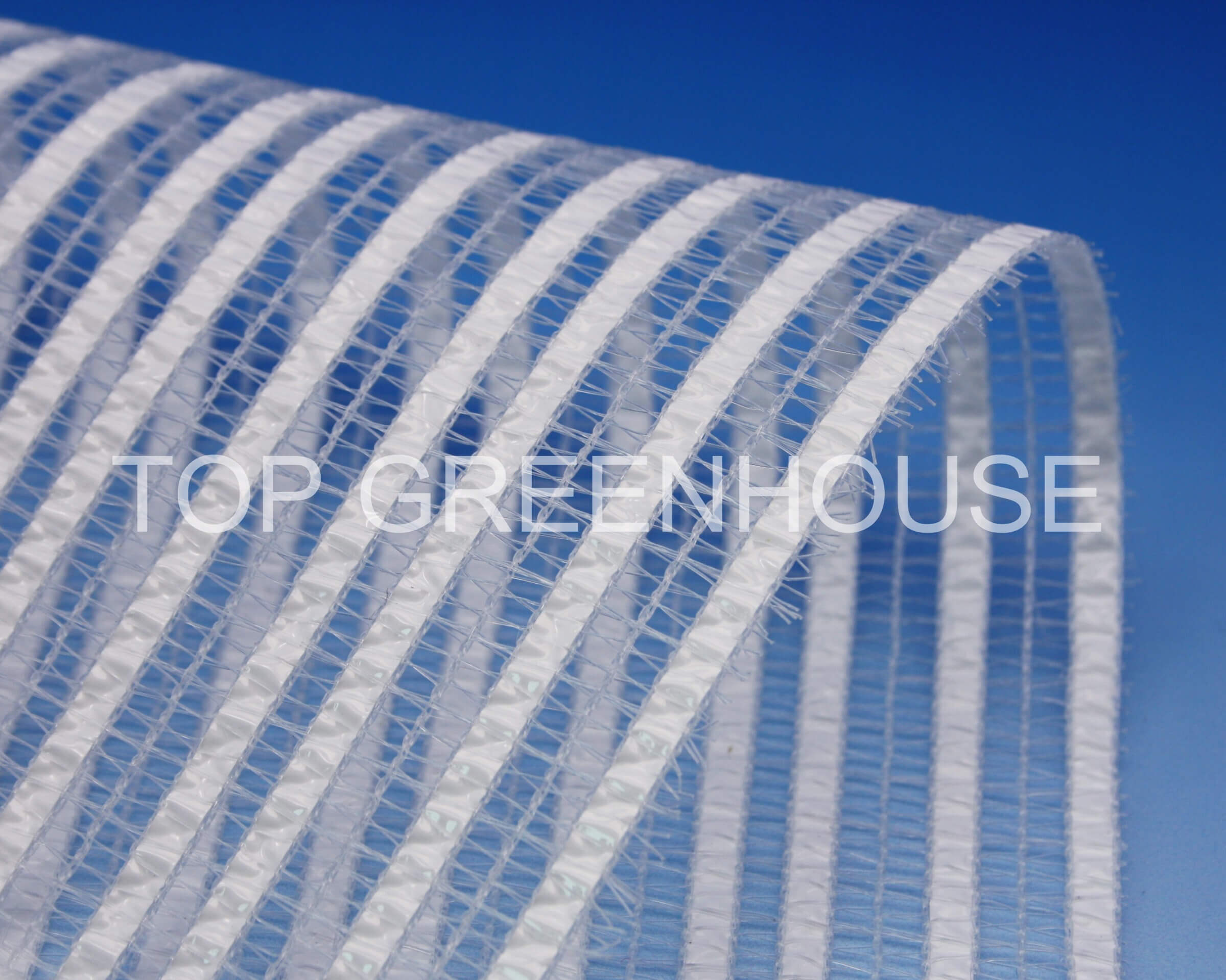
TW30 E
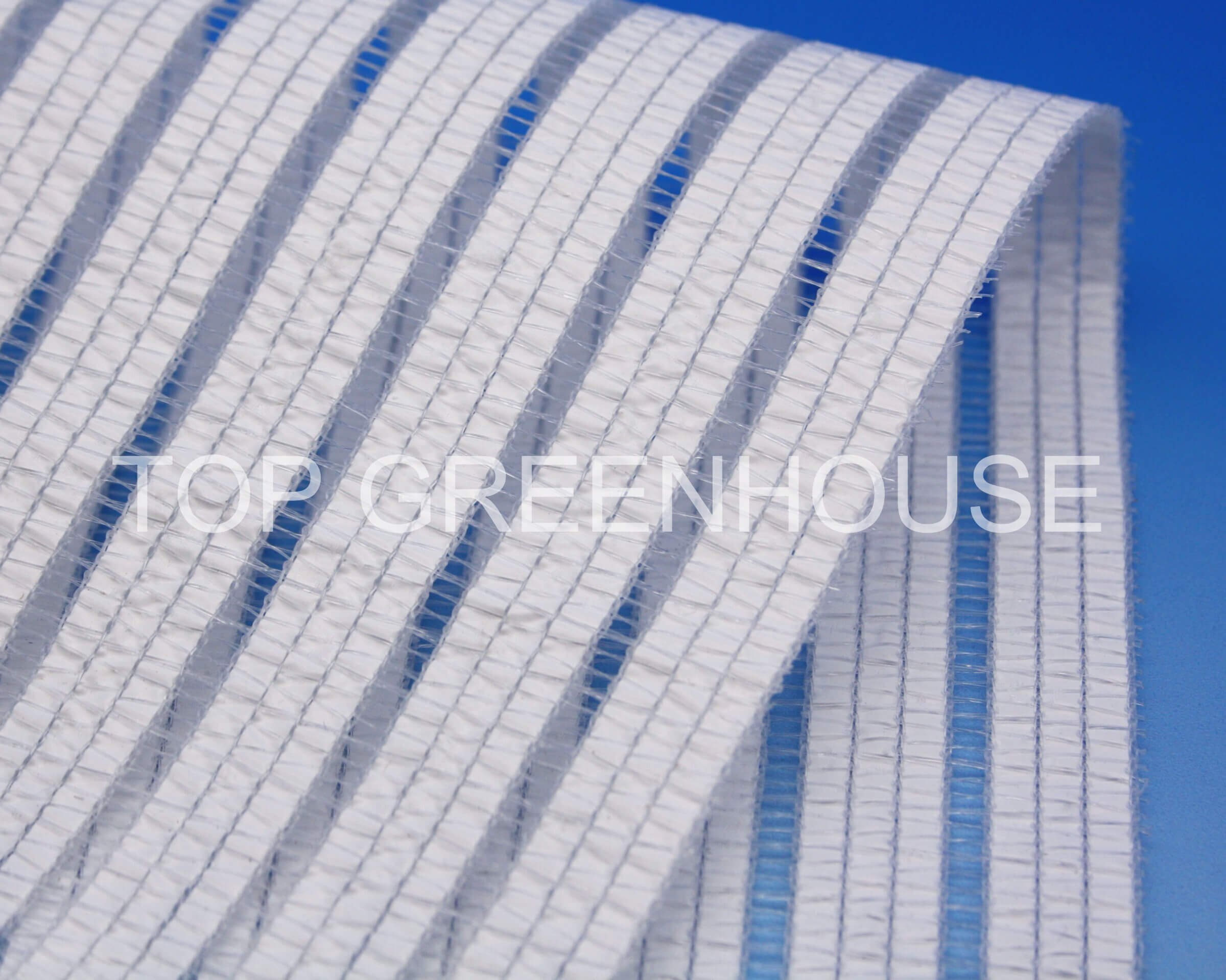
TW60 E
How White Screens Work
White reflects sunlight rather than absorbing it. When installed externally, a white screen:
• Reflects a large portion of solar radiation
• Reduces internal heat buildup
• Provides gentle, diffused light suitable for many crops
Think of it like a sun umbrella—it keeps things cool underneath by bouncing sunlight away.
Key Features and Benefits
• High reflectivity, lowering heat inside the greenhouse
• Excellent light diffusion, minimizing hotspots
• Gentle shading effect suitable for light-loving crops
• Lower temperature spikes on hot days
• Reduces environmental stress on plants
• Durable and easy to maintain
Best Use Cases
White screens are ideal for:
• Vegetables (tomatoes, cucumbers)
• Cut flowers
• Seedlings needing uniform light
• Hot climates that need strong cooling
Limitations
• Not suitable for crops needing heavier shading
• Less effective in extreme climates compared to aluminum screens
• Not as energy-efficient at night
Black-White Screen for External Shading
What Is a Black-White Screen?
A black-white external screen has one white reflective side and one black absorptive side. It is designed for environments that require both shading and cooling, but with more control over light blockage.
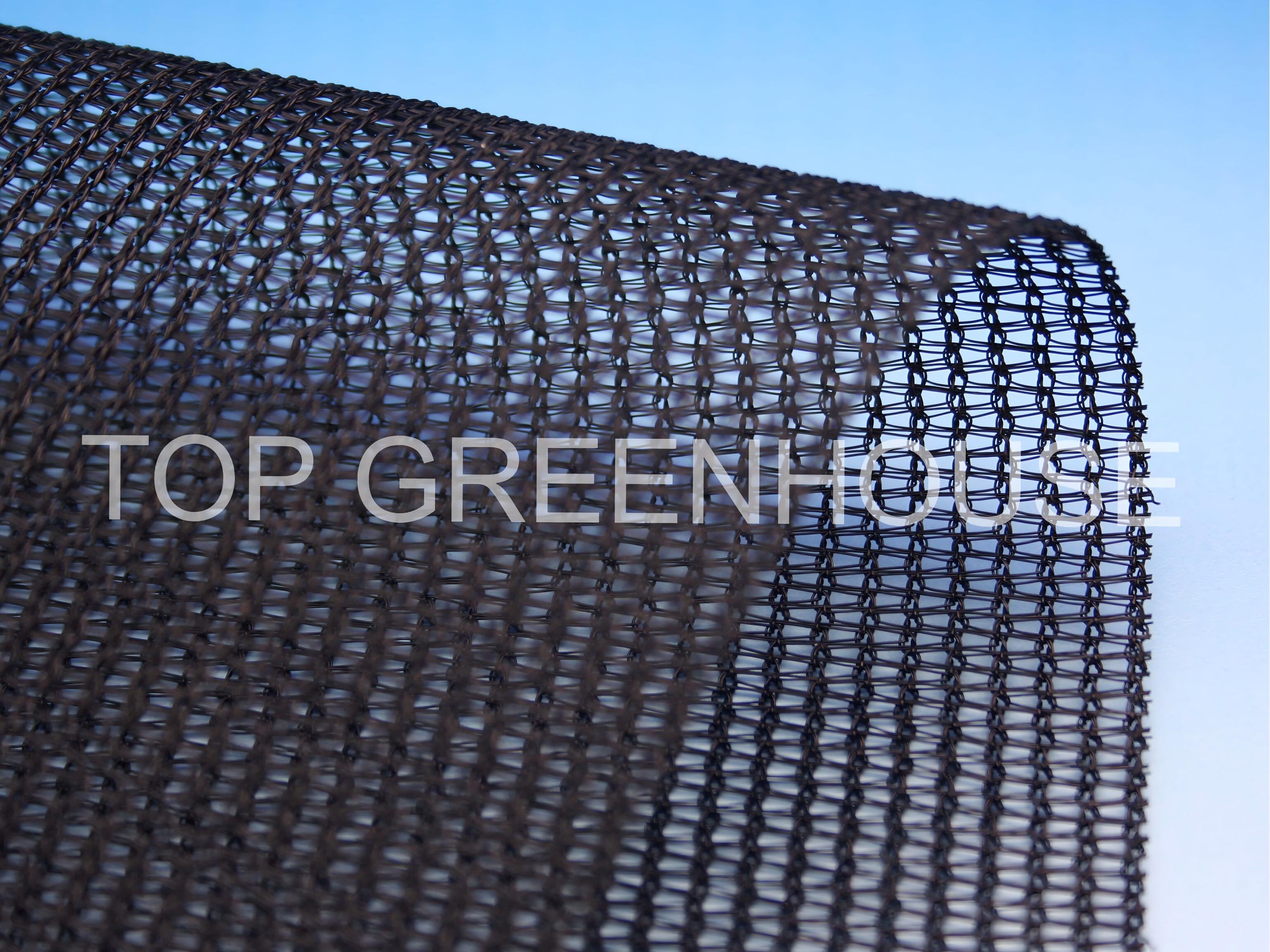
TB80
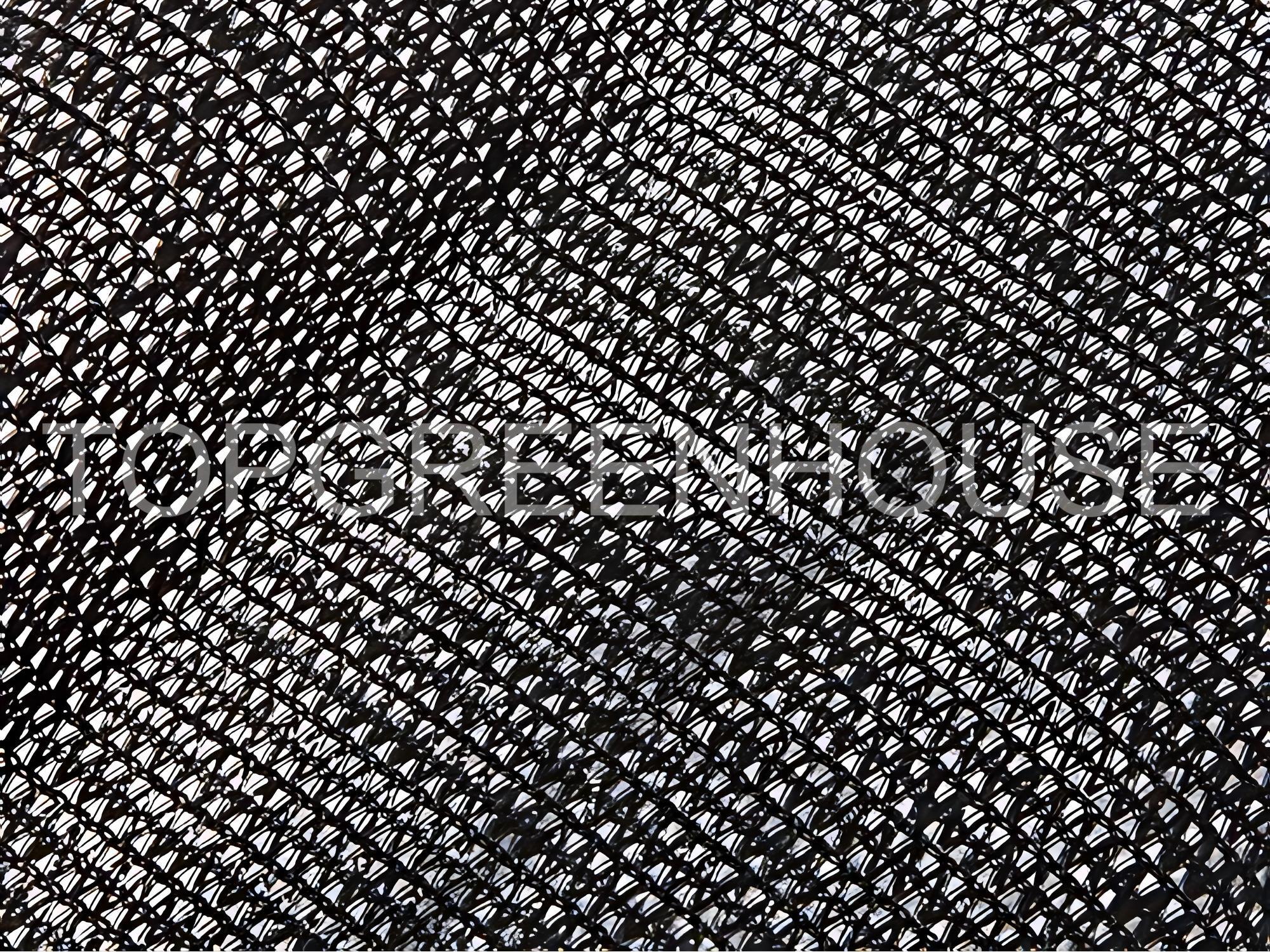
TB70 F
How Black-White Screens Work
• The white exterior reflects sunlight and heat.
• The black interior absorbs remaining light, preventing reflection and reducing overall brightness.
This creates a balance of cooling and shading intensity.
Key Features and Benefits
• Higher shading percentage than pure white screens
• Dual-light control, combining reflection + absorption
• Better cooling in strong-sun regions
• Suitable for shading-sensitive crops
• Helps control insect pressure due to decreased internal brightness
• Flexible for multiple greenhouse types
Best Use Cases
These screens work well for:
• Leafy greens
• Mushrooms
• Nurseries
• Photoperiod-sensitive crops
• Hot and tropical climates
Limitations
• Reduced light diffusion
• Too dark for some fruiting vegetables
• Can increase humidity due to stronger shading
Aluminum Screen for External Shading
What Is an Aluminum Screen?
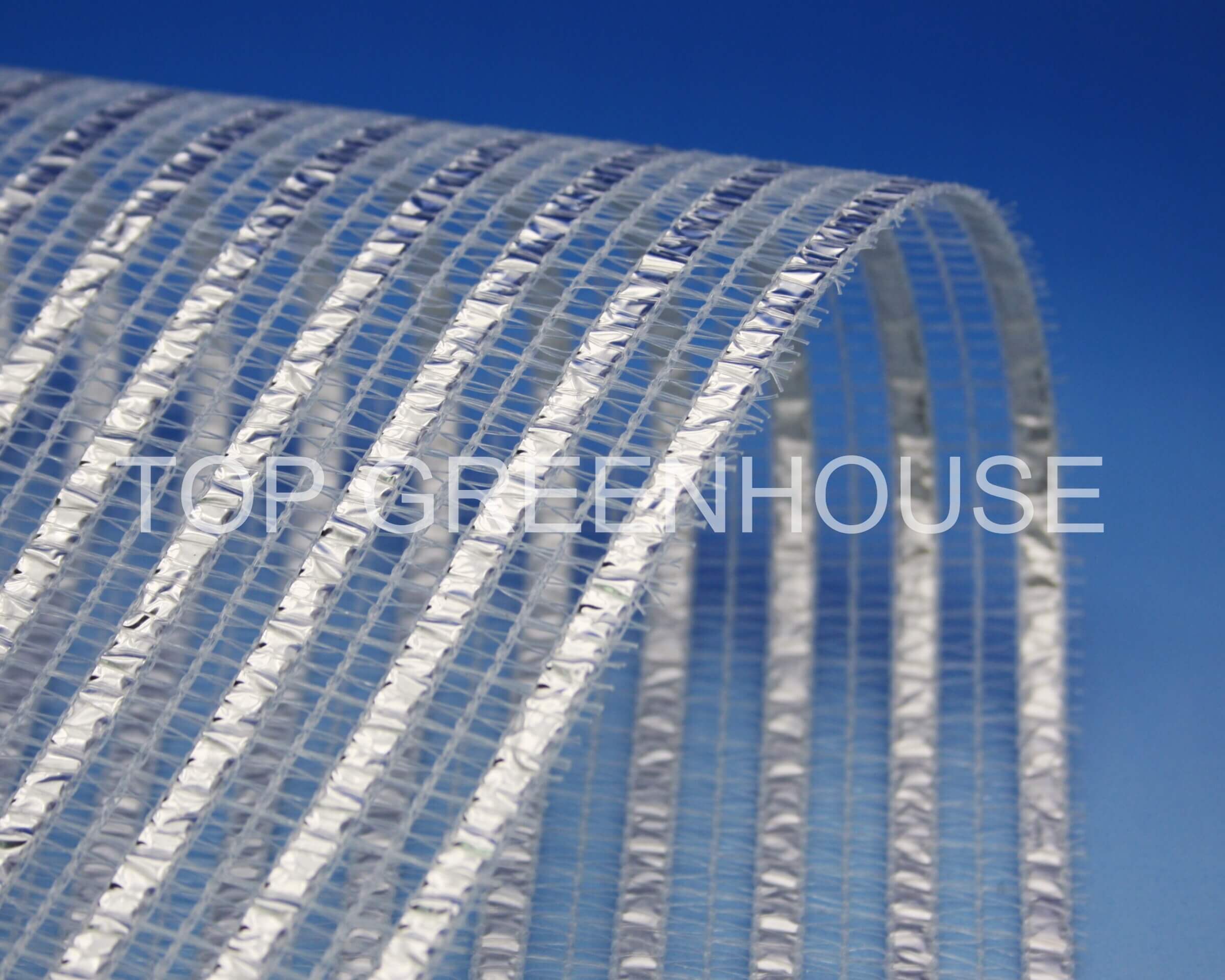
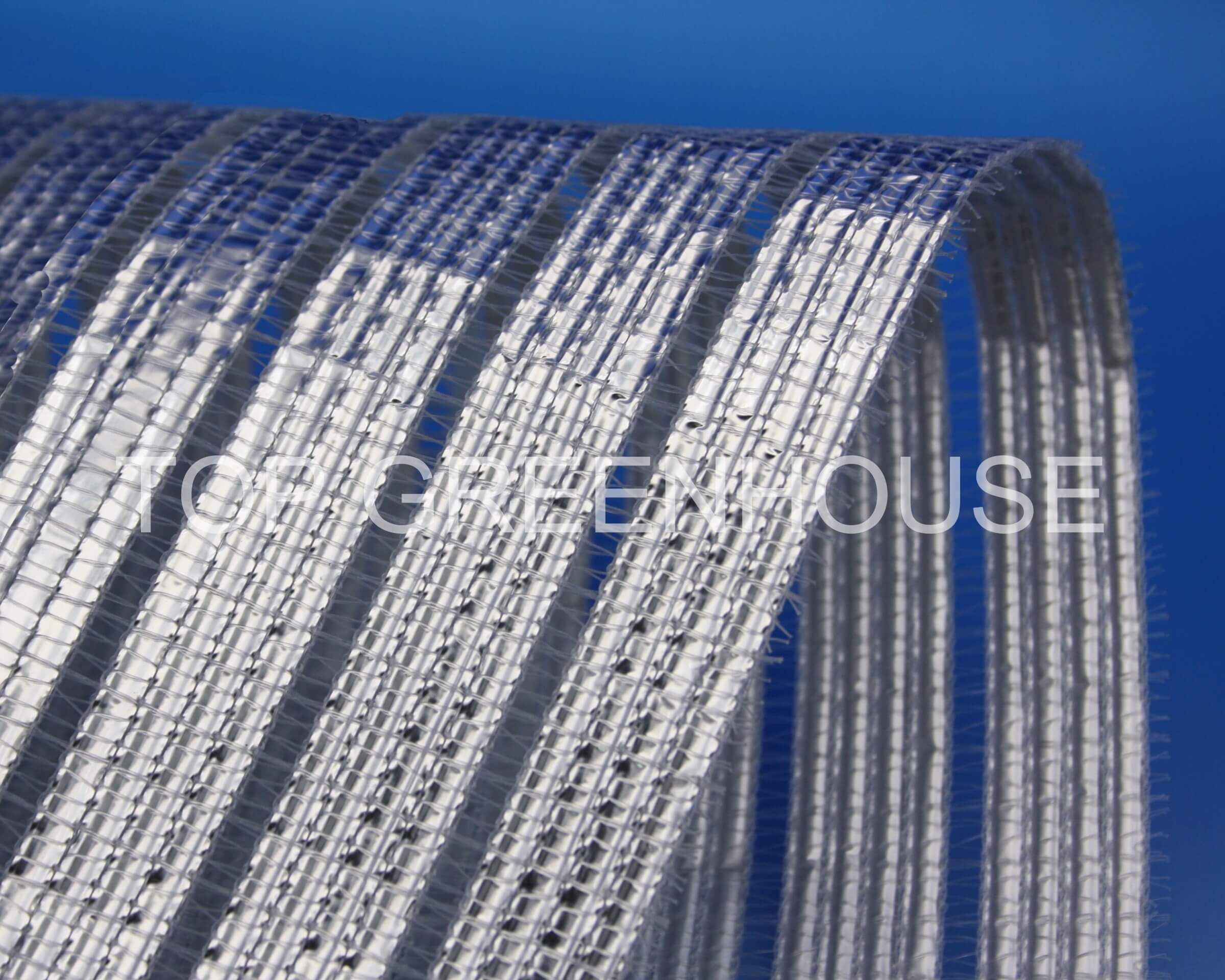
An aluminum external shading screen uses reflective aluminum strips woven with transparent or white threads. These screens are known for their high reflectivity and advanced energy-saving performance.
Aluminum Screen
Aluminum Screen
How Aluminum Screens Work
Aluminum works like a mirror, reflecting a large portion of solar heat before it enters the greenhouse. It also enhances light diffusion, creating a soft-light environment that reduces crop stress.
Key Features and Benefits
• Superior solar reflection, keeping greenhouses significantly cooler
• Best cooling performance among all screen types
• Energy-efficient—retains heat when closed at night
• Excellent light diffusion
• Reduces energy consumption for climate control
• Long lifespan due to durable aluminum strips
Best Use Cases
Aluminum screens are the top choice for:
• High-value crops (roses, peppers, orchids)
• Regions with very intense sunlight
• Greenhouses needing energy savings
• Modern high-tech facilities
Limitations
• Higher upfront cost
• Slightly heavier, requiring better support structure
• May provide too much reflection for shade-loving crops
Head-to-Head Comparison
Light Transmission & Shading Efficiency
Screen Type
Light Transmission
Shading Strength
Diffusion
White
Medium
Low–Medium
Excellent
Black-White
Low–Medium
Medium–High
Moderate
Aluminum
Medium
Medium
Excellent
Cooling Performance
• Best: Aluminum
• Moderate: White
• Strong Shading + Cooling: Black-White
Durability & Weather Resistance
• Aluminum screens are the most durable.
• White screens offer solid performance.
• Black-white screens have moderate UV resistance.
Energy Saving
• Aluminum screens win due to high thermal control.
Crop Suitability
• White: Fruit vegetables, flowers, seedlings
• Black-White: Leafy greens, mushrooms, nurseries
• Aluminum: High-value crops, high-light crops
Cost Comparison
• Lowest: White
• Medium: Black-White
• Highest: Aluminum
How to Choose the Right External Shading Screen for Your Greenhouse
Climate-Based Recommendations
• Hot dry climates → Aluminum
• Hot humid climates → Black-White
• Moderate sunny climates → White
Crop-Based Recommendations
• Vegetables → White
• Nursery, propagation → Black-White
• High-value flowers & fruits → Aluminum
Budget Considerations
• Limited budget → White
• Best value for performance → Black-White
• Long-term ROI → Aluminum
Installation Tips
• Ensure compatible greenhouse structure
• Use anti-UV materials for longer lifespan
• Consider automated systems for performance optimization
Conclusion
Choosing between a white screen, black-white screen, and aluminum screen for external shading depends on climate, crop type, and budget. Each screen performs differently in reflecting light, reducing heat, saving energy, and improving crop quality. By understanding their unique characteristics, growers can make the best decision for a stable, productive, and energy-efficient greenhouse environment.
FAQs
1. Which external shading screen is best for very hot climates?
Aluminum screens are the best choice due to their superior heat reflection and cooling performance.
2. Do black-white screens block more light than white screens?
Yes. Black-white screens offer stronger shading because the black side absorbs light rather than reflecting it.
3. Can I install external screens on any greenhouse type?
Most modern greenhouses support external screens, but the structure must be strong enough to hold shading systems.
4. Are aluminum shading screens worth the higher cost?
Yes. They provide excellent cooling and long-term energy savings, making them a strong investment for high-tech operations.
5. Are white screens suitable for all crops?
White screens suit many crops, but shade-loving crops may require the stronger shading provided by black-white screens.


